Nitrile Gloves Information
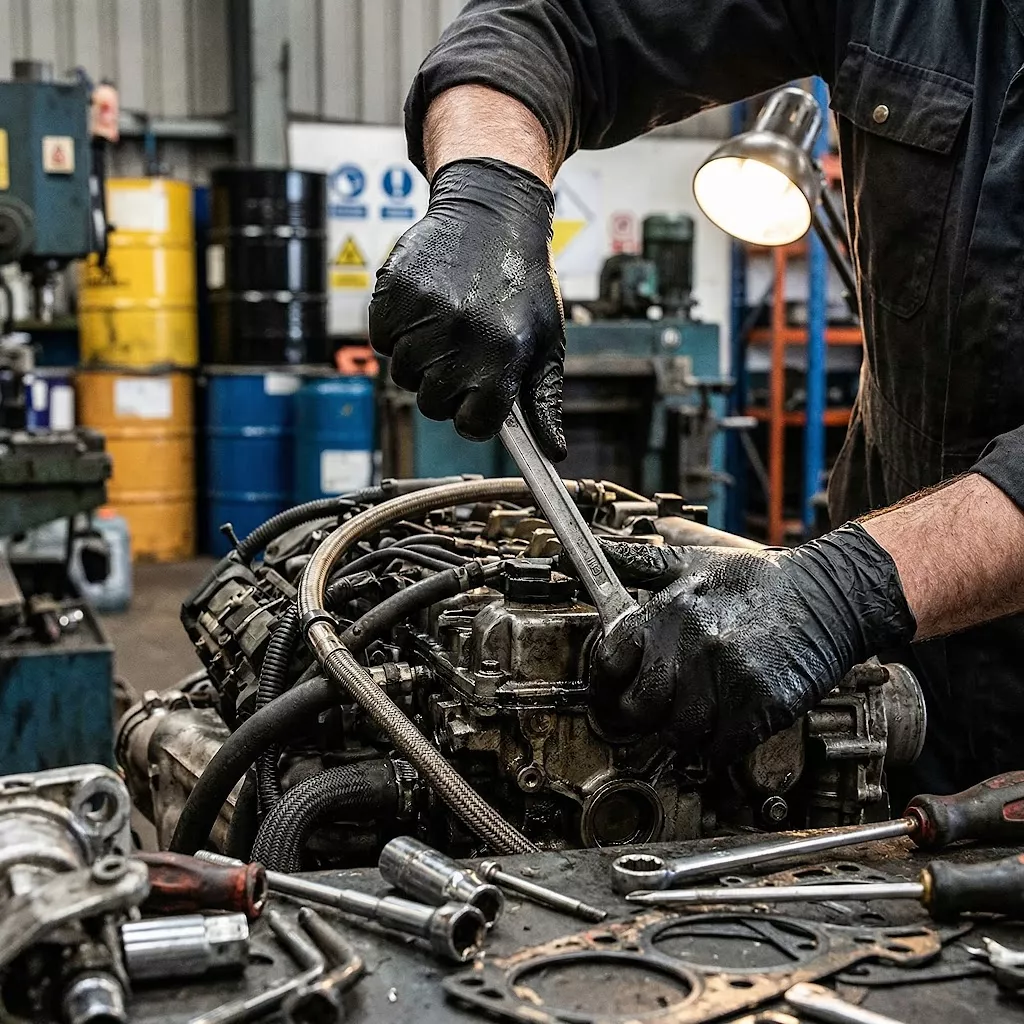


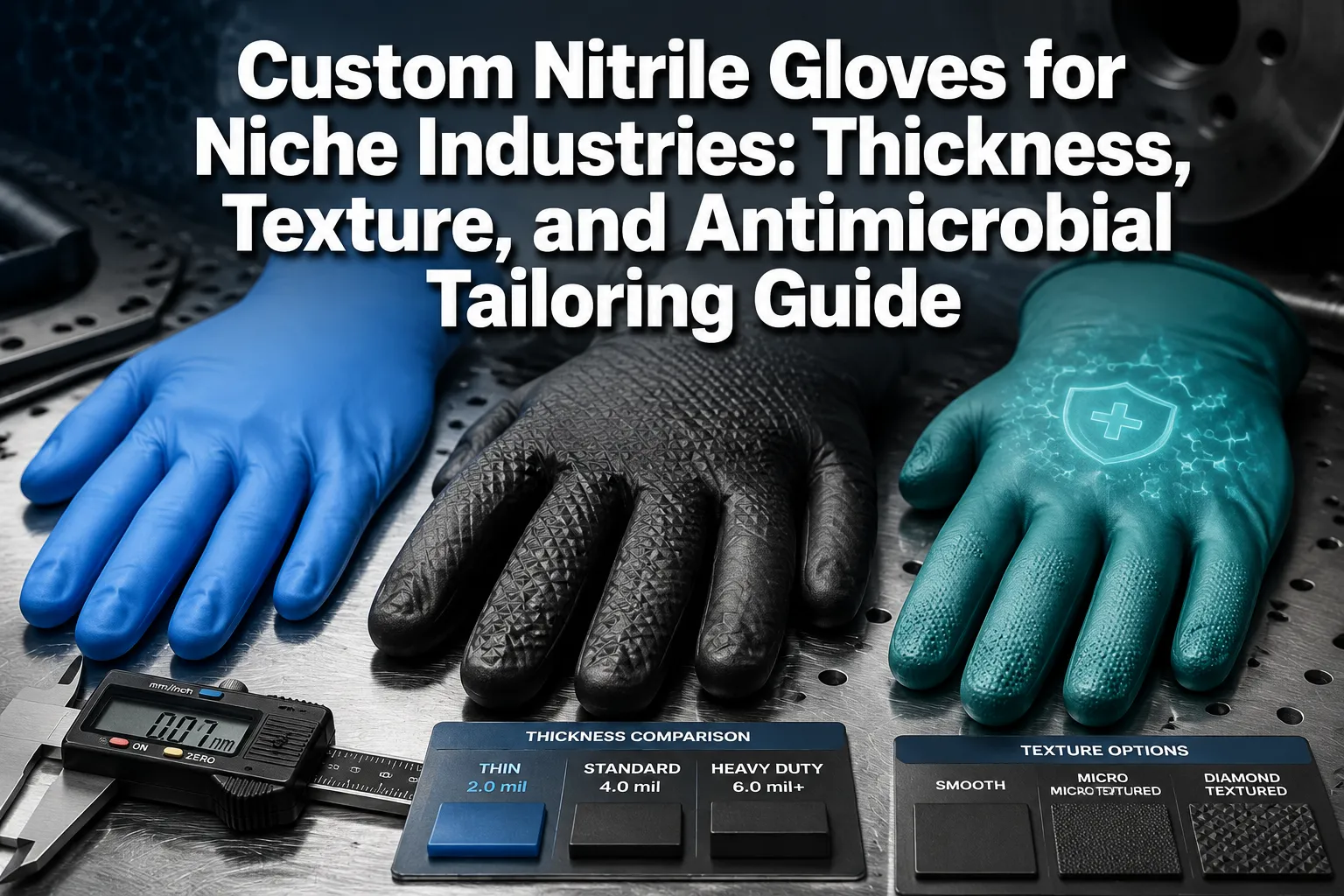
Last updated: July 4, 2026 A single automotive technician can tear through 12 pairs of standard nitrile gloves in one shift when working with sharp metal edges and aggressive solvents, costing shops hundreds of dollars monthly in wasted inventory. Custom nitrile gloves engineered with specific thickness, texture patterns, and antimicrobial coatings solve this problem by […]

Last updated: July 4, 2026 Quick Answer Nitrile gloves have become the standard in dental practices because they offer superior puncture resistance, excellent barrier protection against saliva and blood, and eliminate latex allergy risks while maintaining the tactile sensitivity required for precise procedures. Dental professionals typically use 4-6 mil powder-free nitrile gloves that fit snugly […]

Last updated: July 4, 2026 Quick Answer Nitrile glove demand has expanded dramatically beyond healthcare into automotive, construction, and industrial sectors due to post-pandemic hygiene awareness, stricter workplace safety regulations, and superior chemical resistance compared to latex alternatives. These industries now account for a significant portion of global nitrile glove consumption, driven by protection needs […]

Last updated: July 4, 2026 Between 8% and 17% of healthcare workers worldwide now show sensitivity to natural rubber latex proteins, a dramatic increase from less than 1% before 1980. This surge has fundamentally reshaped medical supply procurement, patient safety protocols, and the global disposable glove market. Understanding latex allergy epidemiology and nitrile’s role in […]
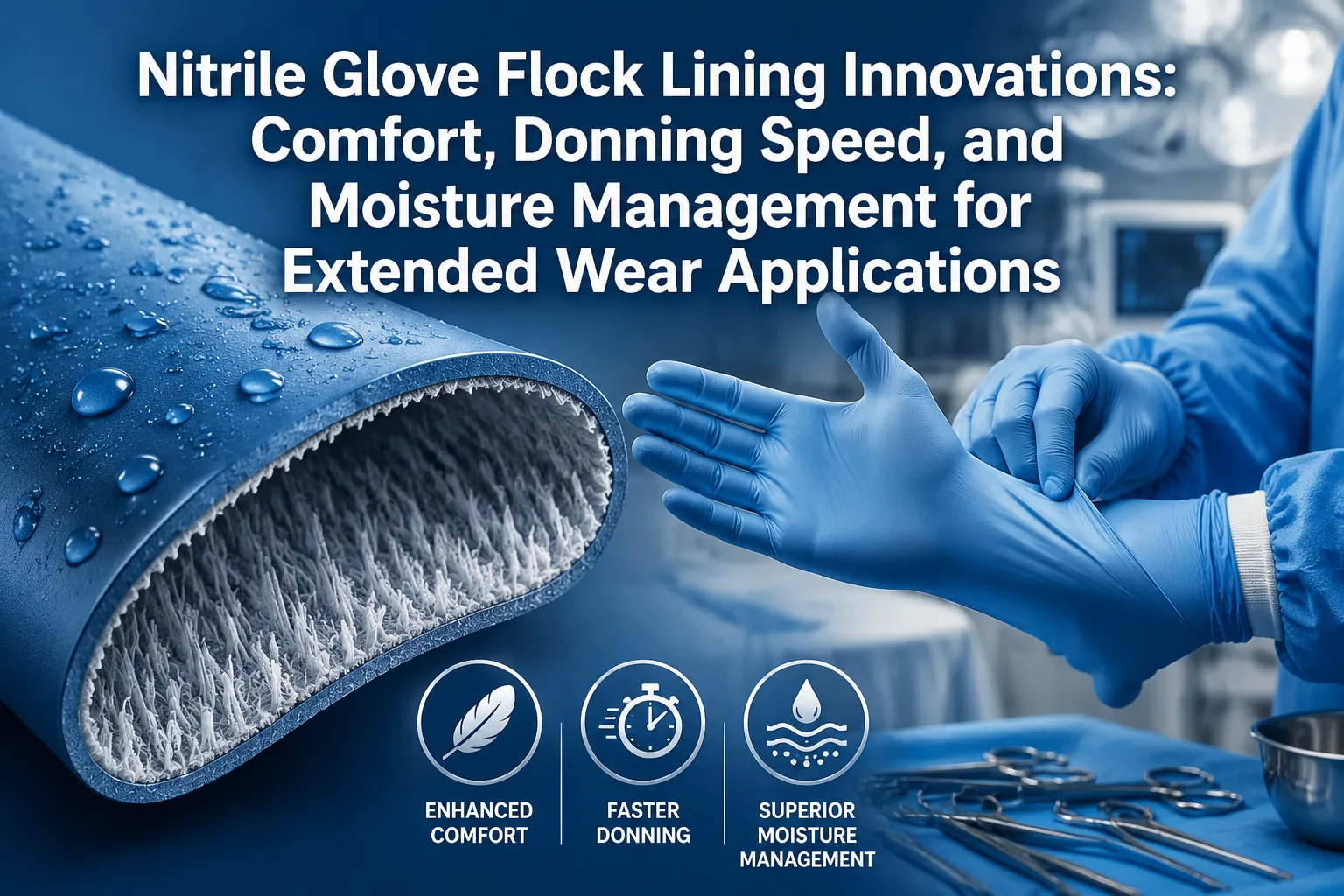
Last updated: July 4, 2026 Healthcare workers, food service professionals, and industrial technicians wearing nitrile gloves for 8-12 hour shifts face a common challenge: hand fatigue, moisture buildup, and difficulty donning gloves quickly during high-volume tasks. Flock lining technology addresses these issues by bonding short textile fibers to the interior of nitrile gloves, creating a […]
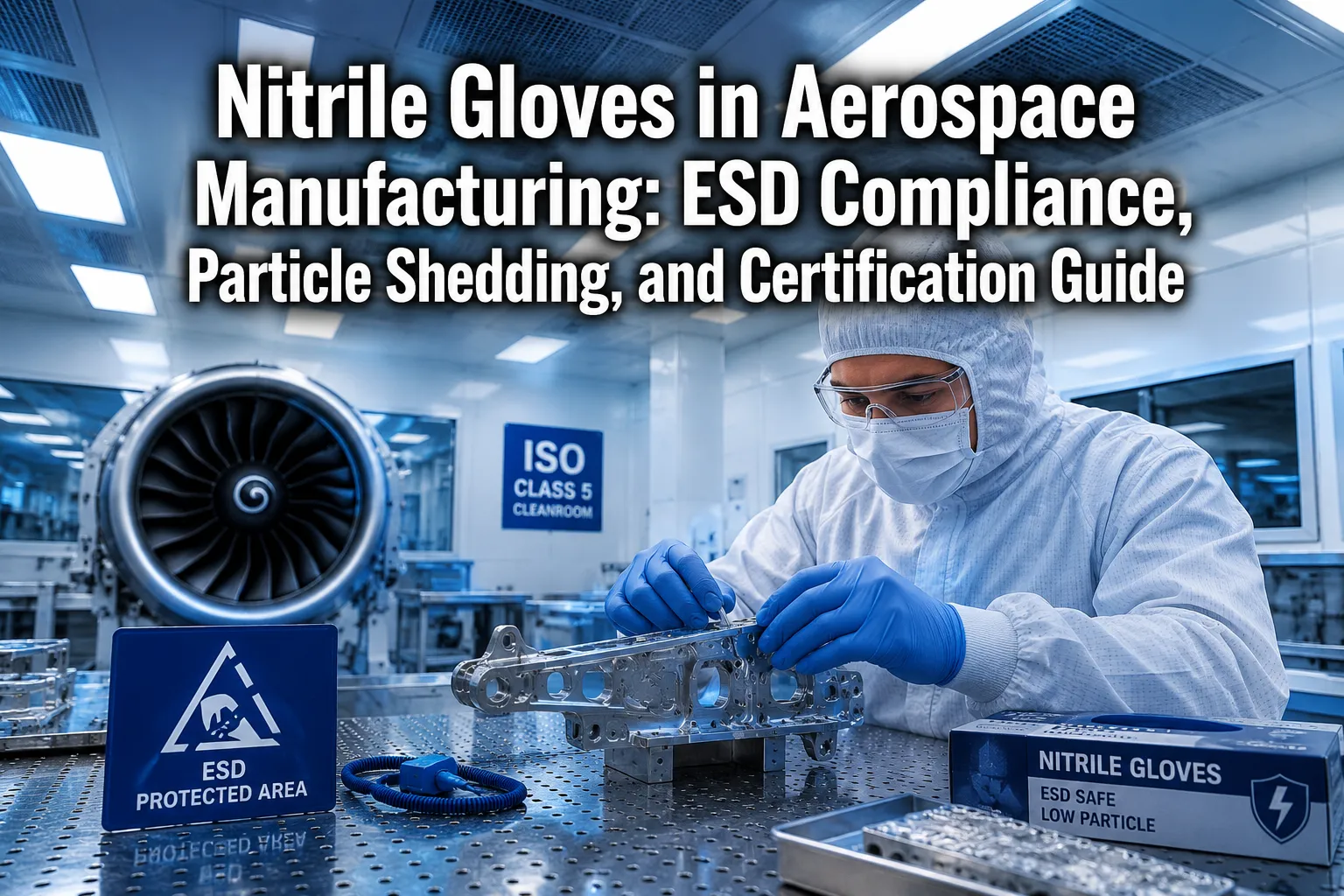
Last updated: July 3, 2026 Quick Answer Aerospace manufacturing demands nitrile gloves that meet strict ESD (electrostatic discharge) compliance standards, typically surface resistivity between 10^4 to 10^11 ohms, and particle shedding limits below 100 particles per glove for ISO Class 5 cleanrooms. These specialized gloves must carry certifications including ANSI/ESD S20.20, ISO 16750, and ASTM […]